 |
 |
 |
 |
 |
|
 |
|
 |
|
 |
|
 |
|
 |
|
 |
 |
Understanding the Main Benefits of Team CRM: Common Mistakes to AvoidIn the ever-evolving landscape of business technology, Customer Relationship Management (CRM) systems have become indispensable tools for organizations seeking to enhance their interactions with clients, streamline processes, and ultimately drive growth. However, integrating a CRM system into a team setting presents its own unique set of challenges and opportunities. When implemented correctly, a team CRM can significantly improve collaboration, data sharing, and customer satisfaction. On the other hand, neglecting certain fundamental principles can lead to underutilization or even failure of the CRM initiative. In this article, we will explore the main benefits of team CRM, highlight some common mistakes that teams should avoid, and discuss strategies for ensuring a successful CRM implementation. One of the primary benefits of employing a team CRM is the enhanced ability to foster collaboration among team members. By centralizing customer data, team CRM systems allow different departments-such as sales, marketing, and customer service-to access and share information seamlessly. This integration reduces the silos that often exist within organizations and ensures that everyone is working from the same set of data, thus minimizing misunderstandings and enhancing overall efficiency. Furthermore, team CRM systems often come equipped with communication tools and task management features that further aid in coordination and project management, making it easier for teams to align their efforts towards common goals. Another significant advantage of a team CRM is the potential to enhance customer satisfaction. With better access to customer history and preferences, teams can tailor their interactions to better meet individual client needs. This personalized approach not only helps in building stronger customer relationships but also increases the likelihood of repeat business and referrals. Additionally, a well-maintained CRM system can provide valuable insights into customer behavior, enabling teams to anticipate needs and offer proactive solutions. However, to fully reap these benefits, it is crucial to avoid some common pitfalls associated with team CRM implementation. One frequent mistake is inadequate training. Team members need to be well-versed in using the CRM system to ensure that it is utilized to its full potential. Investing time in comprehensive training sessions can pay off significantly in the long run, as it empowers employees to navigate the system confidently and leverage its features effectively. Another common error is failing to customize the CRM to fit the unique needs of the organization. Off-the-shelf solutions might not address all specific requirements, so it is important to tailor the CRM to align with business processes and objectives. Moreover, it is essential to maintain data quality within the CRM. Inaccurate or outdated information can lead to misguided decisions and strategies. Regular audits and updates of the CRM database are necessary to ensure the integrity and reliability of the data being used. Additionally, organizations should be wary of overcomplicating the system with unnecessary features. While it might be tempting to utilize every available tool, focusing on the core functionalities that directly contribute to team objectives will prevent overwhelm and promote consistent usage. Finally, fostering a culture that embraces change is crucial for the successful adoption of any new technology. Resistance to change can be a significant barrier, so it is important to communicate the benefits of the CRM clearly and involve team members in the implementation process. By encouraging feedback and demonstrating the positive impact of the CRM on daily operations, organizations can cultivate an environment where technology is viewed as an ally rather than a hurdle. In conclusion, while the integration of a team CRM can offer substantial advantages in terms of collaboration and customer satisfaction, it requires thoughtful planning and execution. By avoiding common mistakes such as insufficient training, lack of customization, poor data management, and resistance to change, organizations can maximize the potential of their CRM systems and drive their teams towards greater success. As businesses continue to navigate an increasingly competitive marketplace, the strategic use of a team CRM can be a powerful catalyst for sustainable growth and improved customer relationships. https://www.reddit.com/r/CRM/comments/1dj7zku/crm_for_a_small_team/
I recommend the Teamsale CRM for your office. This is a free CRM download that is fast to set up and easy to use. It gives you all the key ... https://thecrmteam.com/
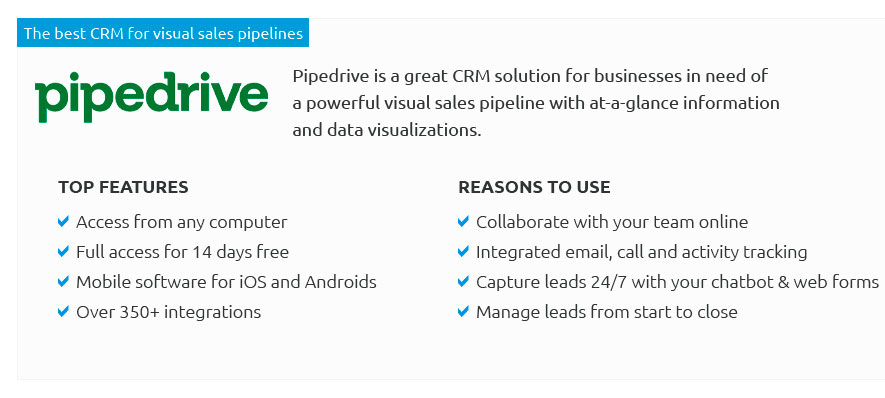
Mastering connections, one client at a time is at the core of our mission, ensuring that every interaction and ... https://www.pipedrive.com/en/features/teams
Pipedrive allows you to organize your salespeople into teams and gain insights into their performance. Use it to set goals and generate reports about wins, ...
|
